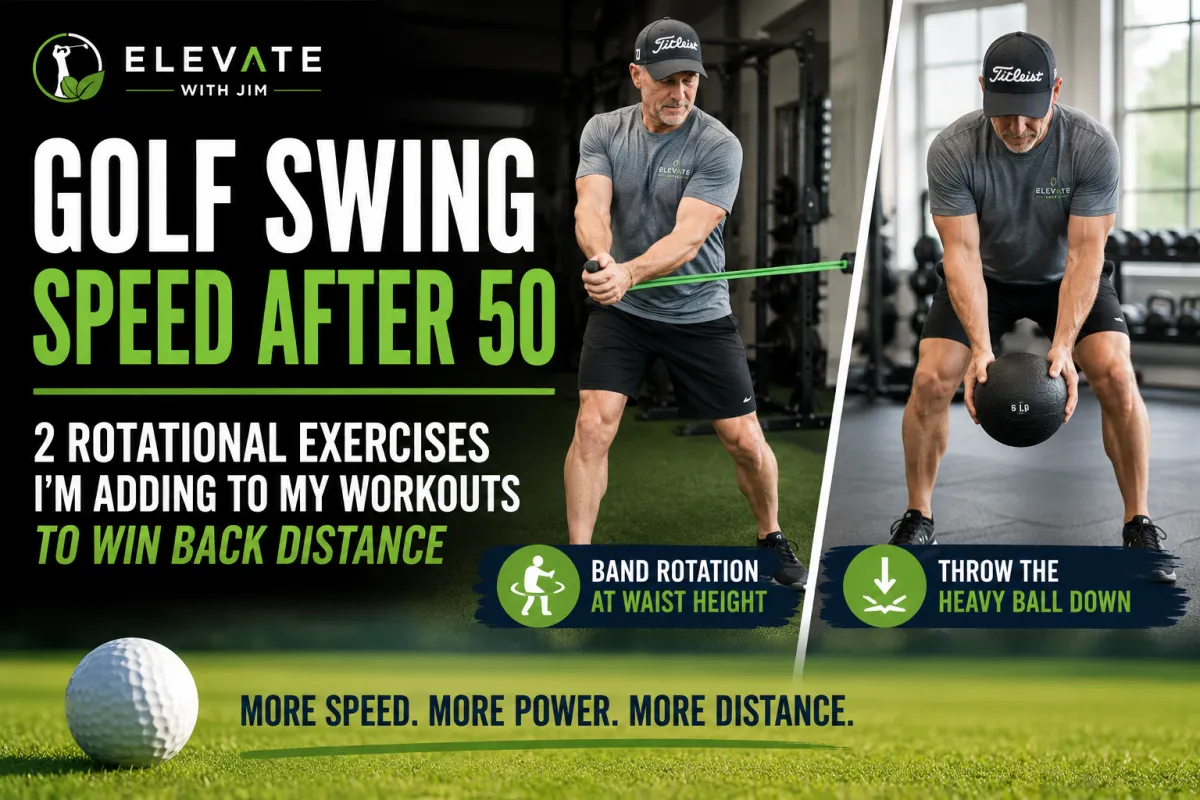
Golf Swing Speed After 50: 2 Exercises I'm Adding to Increase Speed & Distance
If you're a golfer over 50 and you've noticed that the ball doesn't travel quite as far as it used to, you're definitely not alone.
I've experienced it in my own game.
And the more I've looked into why golfers lose distance as they get older, the more I've realized there isn't one simple explanation.
Mobility can matter. Strength can matter. Contact and equipment can matter.
But there's another piece I've become increasingly interested in:
Speed and power.
I've been strength training for years. But one of the things I'm learning is that being strong and being able to move quickly and explosively aren't exactly the same thing.
That's why I'm adding some speed-specific work to my regular strength-training routine.
Why Golf Swing Speed Matters for Distance
This part is pretty straightforward.
If you want to hit your driver farther, clubhead speed matters.
Research looking at the physical determinants of golf performance has found positive associations between muscular strength and power, clubhead speed and carry distance. Researchers have also found that lower-body strength and power appear to be particularly important physical contributors to golf swing performance.
The golf swing itself is an explosive rotational movement.
Your body has to generate force and transfer it through a sequence involving your lower body, pelvis, torso, arms and ultimately the golf club.
Research comparing professional and amateur golfers has found meaningful differences in pelvis and upper-torso rotational velocities during the golf swing.
In other words, rotation isn't just about being able to turn. It's also about how effectively and quickly you can produce that movement.
And that's where this gets especially interesting for golfers as we get older.
Strength and Power Aren't the Same Thing
I've always understood the importance of maintaining strength as I age.
What I hadn't thought as much about was power.
A simple way I think about it is:
Strength is your ability to produce force.
Power involves producing force quickly.
Unfortunately, speed and power are among the physical capabilities that tend to decline as we age. Research on aging and motor performance shows declines in muscle strength, speed and power beginning in midlife, with declines becoming more pronounced later in life.
That doesn't mean we're powerless to do anything about it.
A systematic review and meta-analysis of older adults found that power-oriented training can improve muscle power and certain measures of physical performance. Another major review found a modest improvement in physical function from power training compared with traditional strength training, although the researchers noted that the certainty of some of the evidence remains limited.
And there's some golf-specific evidence too.
In one study of golfers averaging about 65 years old, an eight-week strength and flexibility program increased average clubhead speed from approximately 85 mph to 87 mph. Another study involving older male golfers found improvements in clubhead speed following an eight-week functional training program.
That's enough to make me interested.
Two Rotational Speed Exercises I'm Adding
I recently came across two movements from Perform for Golf that caught my attention.
Perform for Golf specializes in golf-specific fitness and uses strength, mobility and power training to help golfers improve physical performance. Their material on golf speed emphasizes something I think is particularly relevant: developing speed isn't simply about trying to swing harder.
I'm going to incorporate these two movements into my regular strength workouts twice a week.
1. Rotational Band Exercise
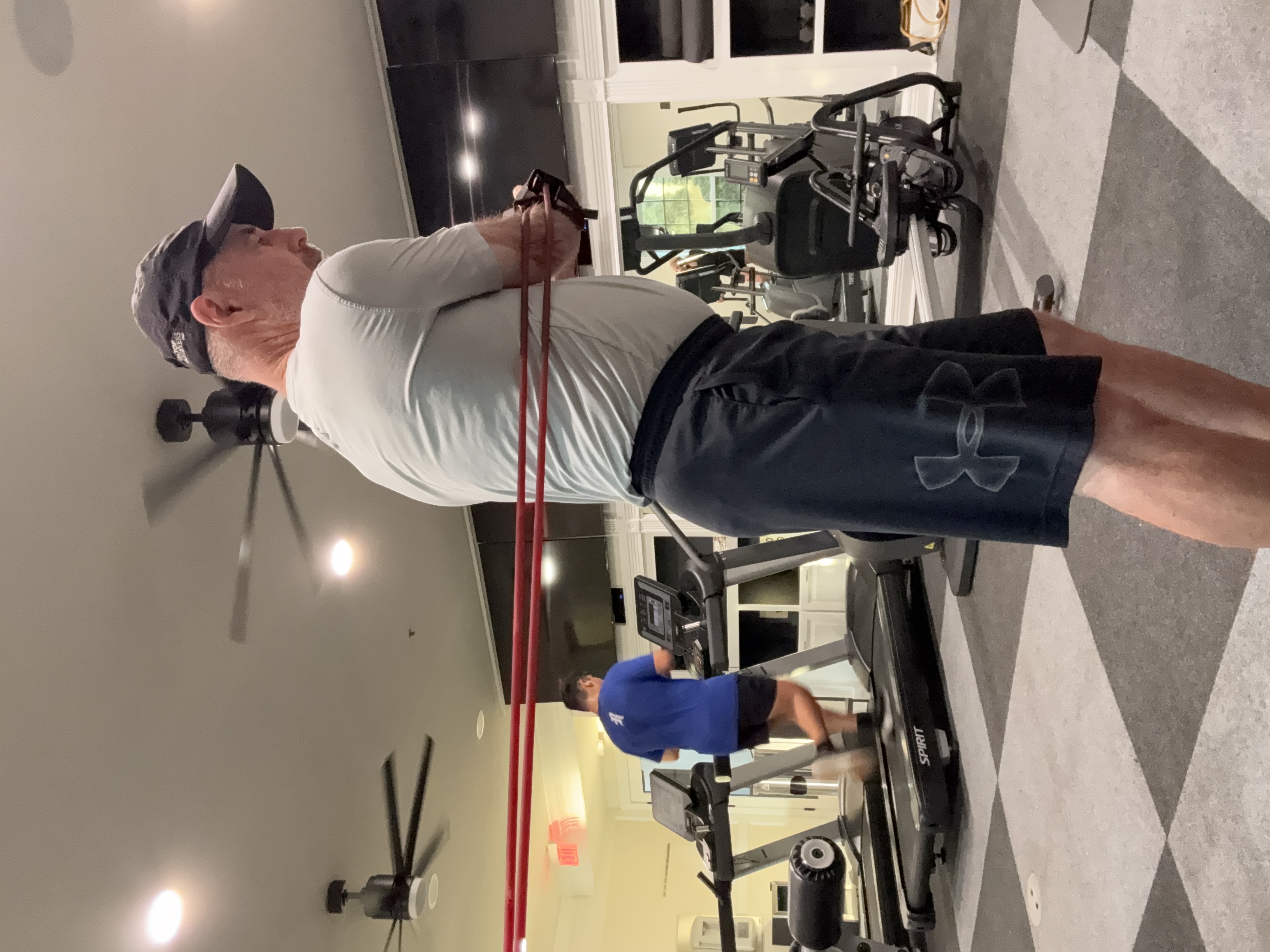
The first uses a resistance band anchored around waist height.
Standing sideways to the anchor, you hold the band and rotate through the movement, emphasizing an explosive rotation rather than simply pulling with your arms.
The reason this caught my attention is obvious once you watch the movement.
Golf is rotational.
Perform for Golf includes a similar rotational band movement in its golf resistance-band training. It targets the core, obliques and shoulders and is intended to develop the rotational muscles involved in producing power in the golf swing.
The important distinction for me is how I'm approaching it.
I'm not trying to see how much resistance I can move.
I'm trying to move quickly.
That's different from much of my normal strength training.
2. Medicine Ball Slam
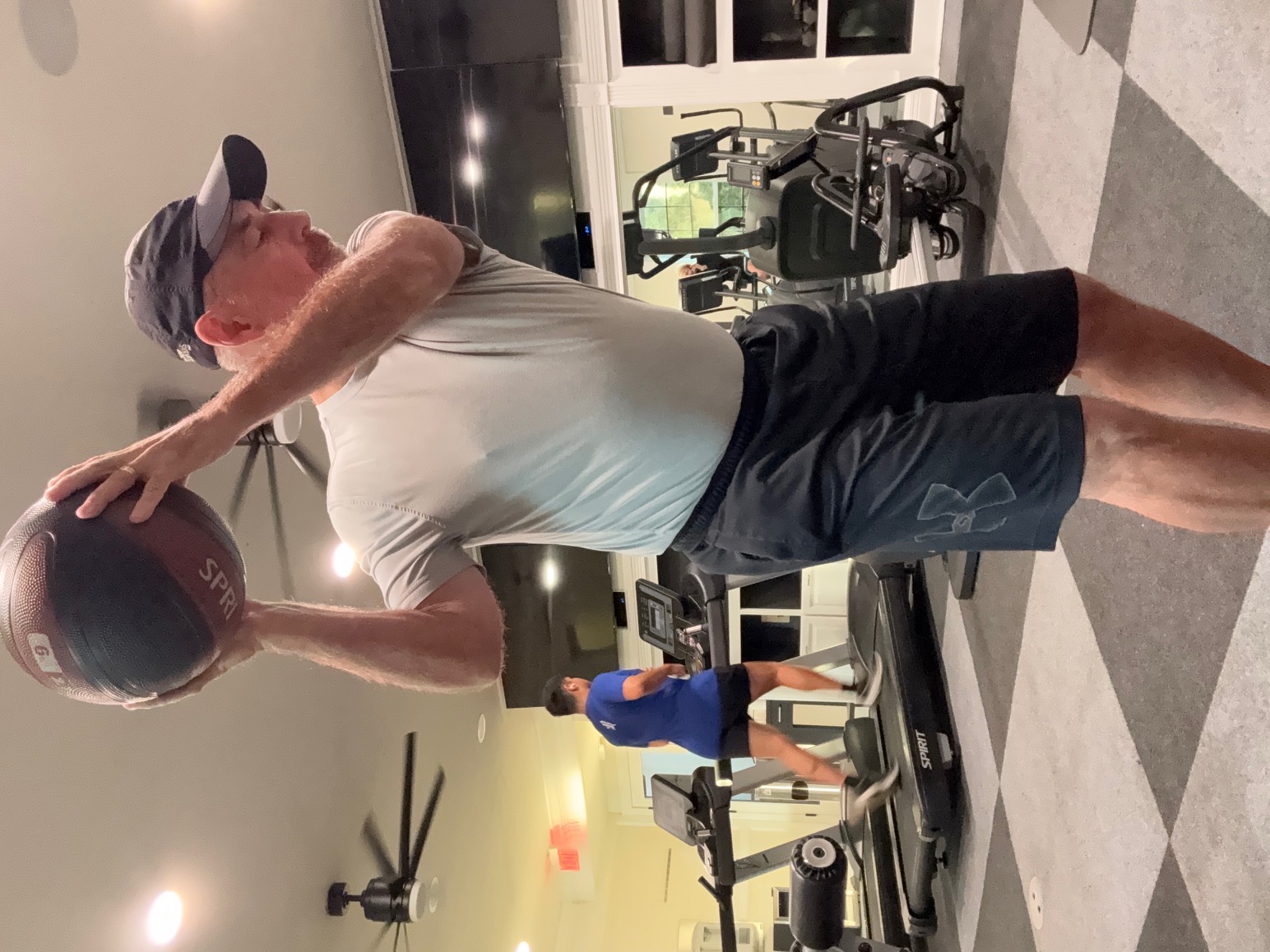
The second exercise uses a medicine ball.
The movement involves generating force through the body and explosively driving the ball down toward the ground.
Perform for Golf uses medicine-ball exercises specifically to develop the lateral, vertical and rotational forces involved in golf. Their vertical medicine-ball slam emphasizes generating explosive movement through the legs and core, while their rotational throws emphasize rotational speed and full-body coordination.
One detail I found particularly useful was their recommendation to use a relatively light medicine ball when training for power.
The objective isn't simply:
How heavy a ball can I throw?
It's:
How explosively can I move it with good control?
Perform for Golf suggests a ball in roughly the 4–8 pound range for this type of work and recommends prioritizing speed and technique over maximum weight.
Why I'm Adding These to My Strength Workouts
I'm not replacing my normal strength training.
I'm adding another component to it.
My current thinking is:
Strength helps me maintain the ability to produce force.
Speed work helps me practice producing that force quickly.
And golf requires both.
Perform for Golf actually recommends selecting two or three medicine-ball drills and incorporating them twice per week as part of a warm-up or strength session.
That's exactly how I'm going to approach this.
Twice a week, during my normal strength-training workouts, I'll incorporate these two speed movements.
I'm not expecting some magical overnight transformation.
I'm interested in what happens over time.
Can Golfers Over 50 Actually Gain Swing Speed?
This may be the most interesting question.
I think it's easy to assume:
I'm getting older. Of course I'm getting shorter.
Some decline may certainly come with aging.
Research on older golfers has found lower clubhead and ball speeds compared with younger golfers, along with differences in the way older golfers move during the swing.
But that doesn't necessarily mean we should simply accept every lost yard as inevitable.
The research showing improvements in clubhead speed after physical training in older golfers is one reason I'm interested in experimenting with this.
And rotational power appears particularly relevant. A study involving competitive golfers found that rotational power training improved rotational force and power and produced potential benefits in ball speed and carry distance—although notably, clubhead speed itself did not increase in that study.
That's a useful reminder that distance is more complicated than one number.
Which brings me back to something I've been talking about quite a bit lately.
Swing Speed Is Only One Piece of Getting Your Distance Back
When I started researching distance loss, I found myself thinking much more broadly than simply:
How can I swing faster?
That's why I organized my Distance Guide around five of the biggest areas that can affect distance as we get older:
Mobility
Can your body still move through the ranges required for an athletic golf swing?
Strength
Can you produce enough force?
Speed & Power
Can you produce that force quickly?
Contact & Efficiency
How much of the speed you already have is actually being transferred to the ball?
Equipment & Launch
Are your driver, launch conditions and golf ball helping or hurting the distance you're capable of producing?
For me, the goal isn't necessarily to swing like I did when I was 25.
It's to figure out:
What am I still capable of at 65—and what can I do to get the most out of it?
These two exercises are one small experiment in answering that question.
I'll incorporate them into my strength workouts twice a week and report back on what I learn.
Because I'm not ready to assume every lost yard is gone forever.
See you on the course,
Jim
Want to Find Out Where Your Distance Is Going?
If you've been losing distance as you've gotten older, I created a free guide to help you look at the bigger picture.
The Golfer's Guide to Getting Your Distance Back After 50 walks through five of the biggest areas that can affect distance and includes a simple assessment to help identify where your biggest opportunity may be.
As always, I'm sharing what I'm learning and what I'm doing personally—not prescribing an exercise program. If you're new to explosive training, have an injury or have medical concerns, consider working with an appropriate qualified professional.
Sources
The exercise ideas in this article were inspired by the golf-fitness material from Perform for Golf, particularly its resources on speed training for golfers, resistance-band golf workouts and medicine-ball power training. Additional research referenced above comes from peer-reviewed studies and systematic reviews of golf performance, rotational velocity, older golfers and power training.