

You Choose Your Busy: Making Time for Exercise When Life Gets Busy
I was working with a new wellness client this week when he mentioned something I've heard many times before.
He had a demanding week ahead and wasn't sure how he was going to fit in his strength training.
I understood. I've had plenty of weeks when meetings, deadlines, and other responsibilities made it hard to stick with my own exercise routine.
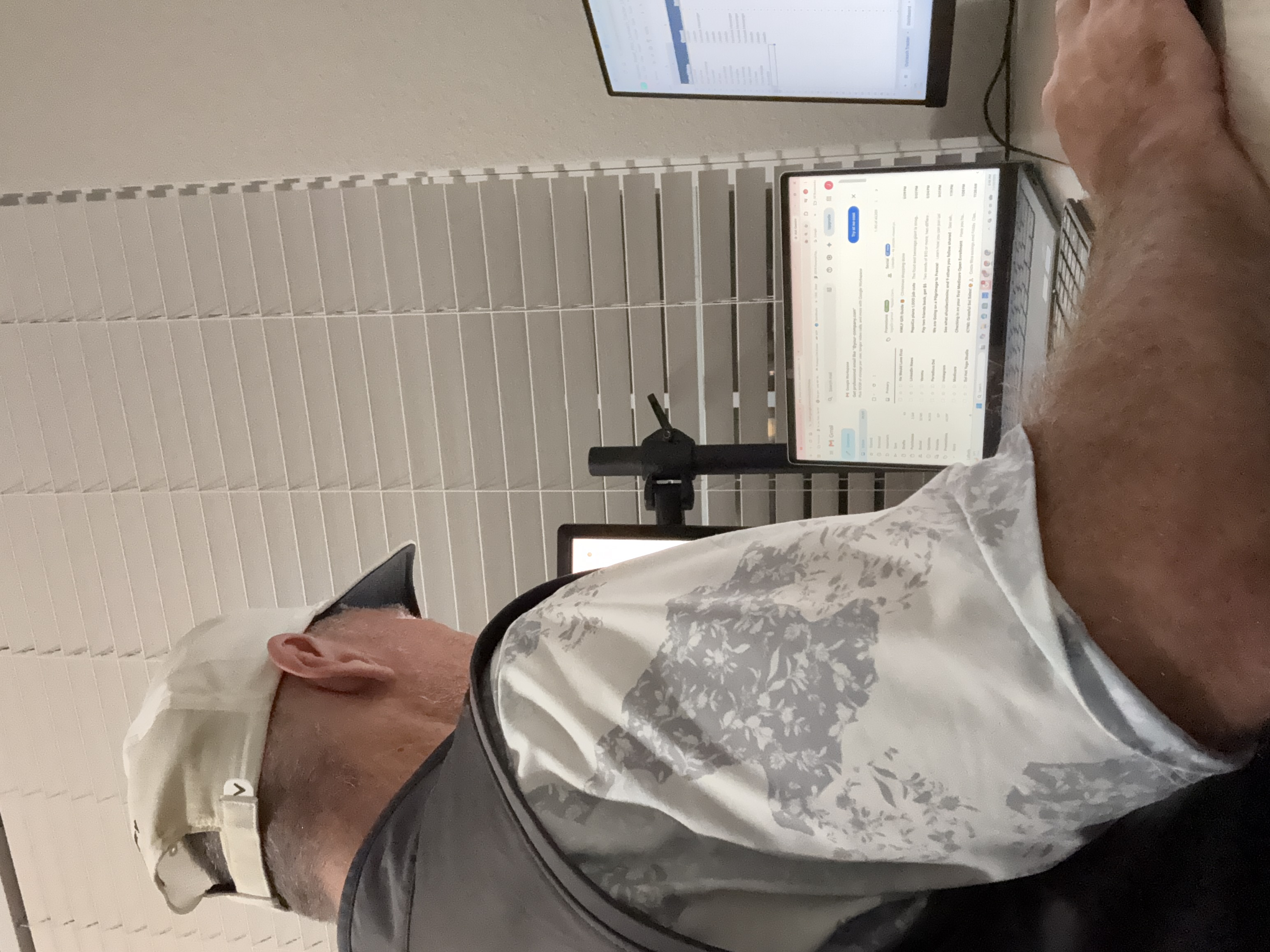
But his comment reminded me of a saying I really like:
“You choose your busy.”
Now, I know that's not literally true every day. We don't choose emergencies, family obligations, or everything our jobs demand of us.
But I do think the saying challenges us to ask an important question:
When life gets busy, where does our health fall on the priority list?
What We Put on Our Calendars Says Something
Think about an important meeting with a client.
You put it on your calendar. You prepare for it. And unless something unusual happens, you show up.
But what about the hour you planned to spend strength training?
It's easy to tell ourselves we'll get to it later.
Then later becomes tomorrow. Tomorrow becomes next week.
Before long, the workout routine we were excited about has disappeared.
I don't think the answer is to feel guilty about every missed session. Life happens.
For me, the bigger lesson is that a commitment to wellness has to show up in the way we organize our time.
If it's something we only do when there's nothing else demanding our attention, it's going to be difficult to stay consistent.
My Reason for Protecting Workout Time
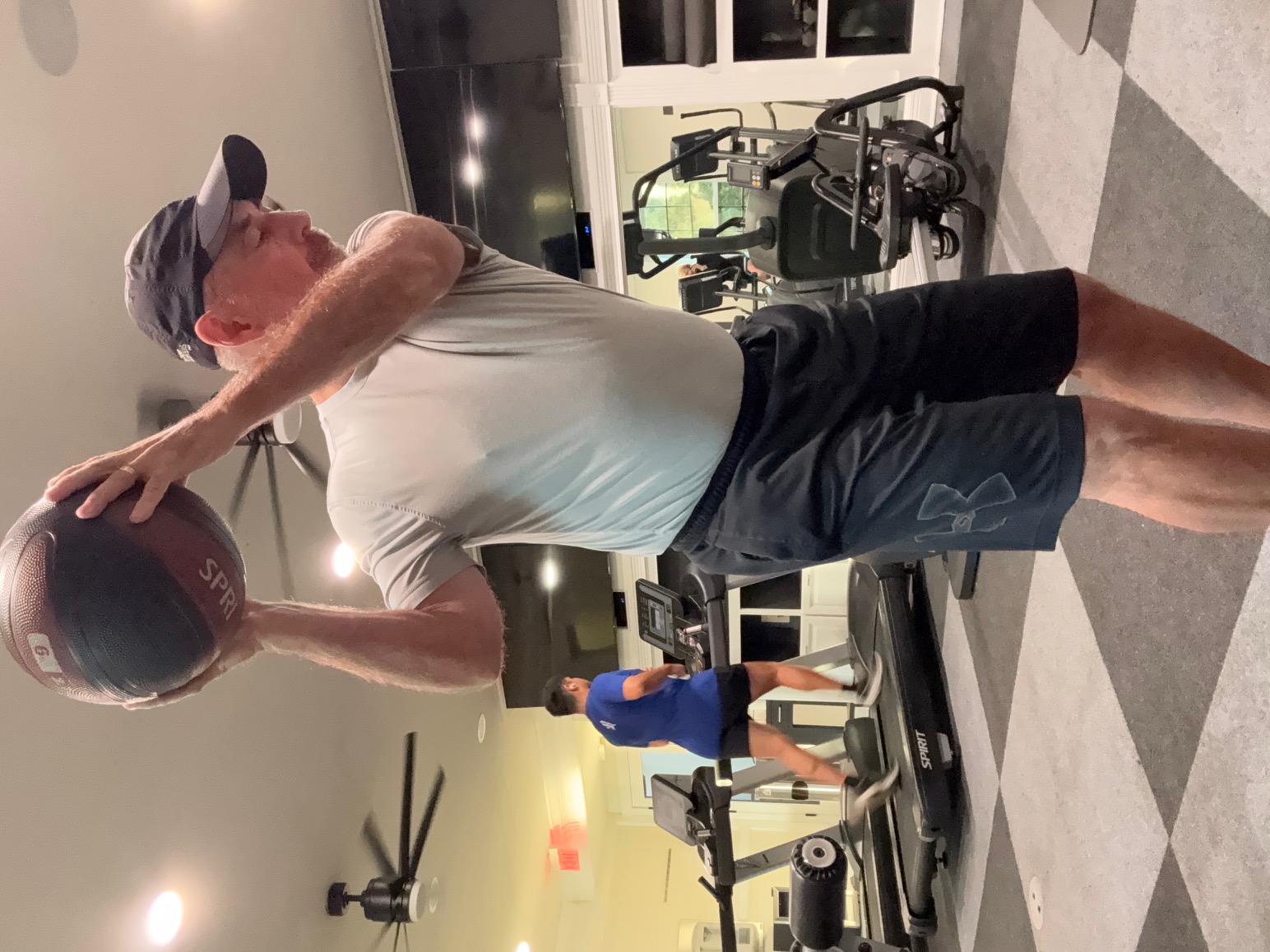
For me, there's some extra motivation.
I love golf. At 65, I want to keep playing the best golf I can for years to come.
When I work on strength, mobility, nutrition, and recovery, I connect that effort to what I want to accomplish on the course.
I want to make a full turn. Maintain my balance. Feel good walking the course. And maybe even pick up a little clubhead speed.
So when I see a workout on my calendar, I don't just see another task.
I see an investment in the golf I want to be playing five or ten years from now.
That connection makes it easier to follow through, especially on a day when I have plenty of reasons to stay at my desk.
Of course, motivation is only part of it. I also need a plan.
Ask the Experts: How Do We Make Exercise Happen?
I looked at recommendations and research on staying physically active when time is limited. Three ideas stood out.
1. Schedule exercise like an appointment
The National Institute of Diabetes and Digestive and Kidney Diseases recommends planning specific times for physical activity and making it part of your routine.
Instead of saying, “I'll work out three times this week,” decide when.
Maybe it's Monday and Thursday before work, with a shorter session on Saturday.
Then put those times on your calendar just as you would a meeting.
That doesn't mean the schedule can never change. It means you're giving exercise a place in the week before other commitments fill the space.
Source: NIDDK — Tips for Starting Physical Activity
2. Decide what you'll do when plans change
There's an approach researchers call an implementation intention, often described as an “if-then” plan.
For example:
If a meeting runs into my planned gym time, then I'll exercise at home that evening.
If I can't fit in a full workout, then I'll do a shorter session rather than skip movement altogether.
Research reviews suggest that this kind of planning can help people follow through on physical activity goals.
I like this because it accepts reality. A busy schedule doesn't have to derail the entire week if you've already thought about an alternative.
Research: Planning Interventions for Physical Activity
3. Don't overlook shorter sessions
I recently wrote about my “bite-size workouts.”
On days when I can't get to the gym, I sometimes take 10-minute breaks from my desk to stretch, use my foam roller, or do a set of strength exercises.
The CDC's physical activity guidance encourages adults to accumulate movement throughout the week. Aerobic activity doesn't have to come in long, uninterrupted workouts to count.
Of course, stretching and foam rolling don't replace aerobic exercise, and a few push-ups don't make up a complete strength program.
But a shorter session can keep me moving on a day when a longer one isn't realistic.
Source: CDC — Adding Physical Activity as an Adult
Jim's Take: Make the Choice Before the Week Gets Away
Here's what I keep coming back to.
If staying healthy is important to me, I can't leave it entirely to chance.
I need to look at the week ahead and decide when I'm going to train.
Then I need to protect that time as best I can.
And when something unavoidable comes up, I need a backup plan—not an excuse to abandon the week.
I also think it helps to remember why we're doing this.
For me, it's golf.
For you, it might be keeping up with your grandchildren, having more energy, staying independent, or simply feeling better.
Whatever your reason, make it personal.
Because a workout isn't just another appointment. It's time you're investing in the life you want to keep enjoying.
One Question for This Week
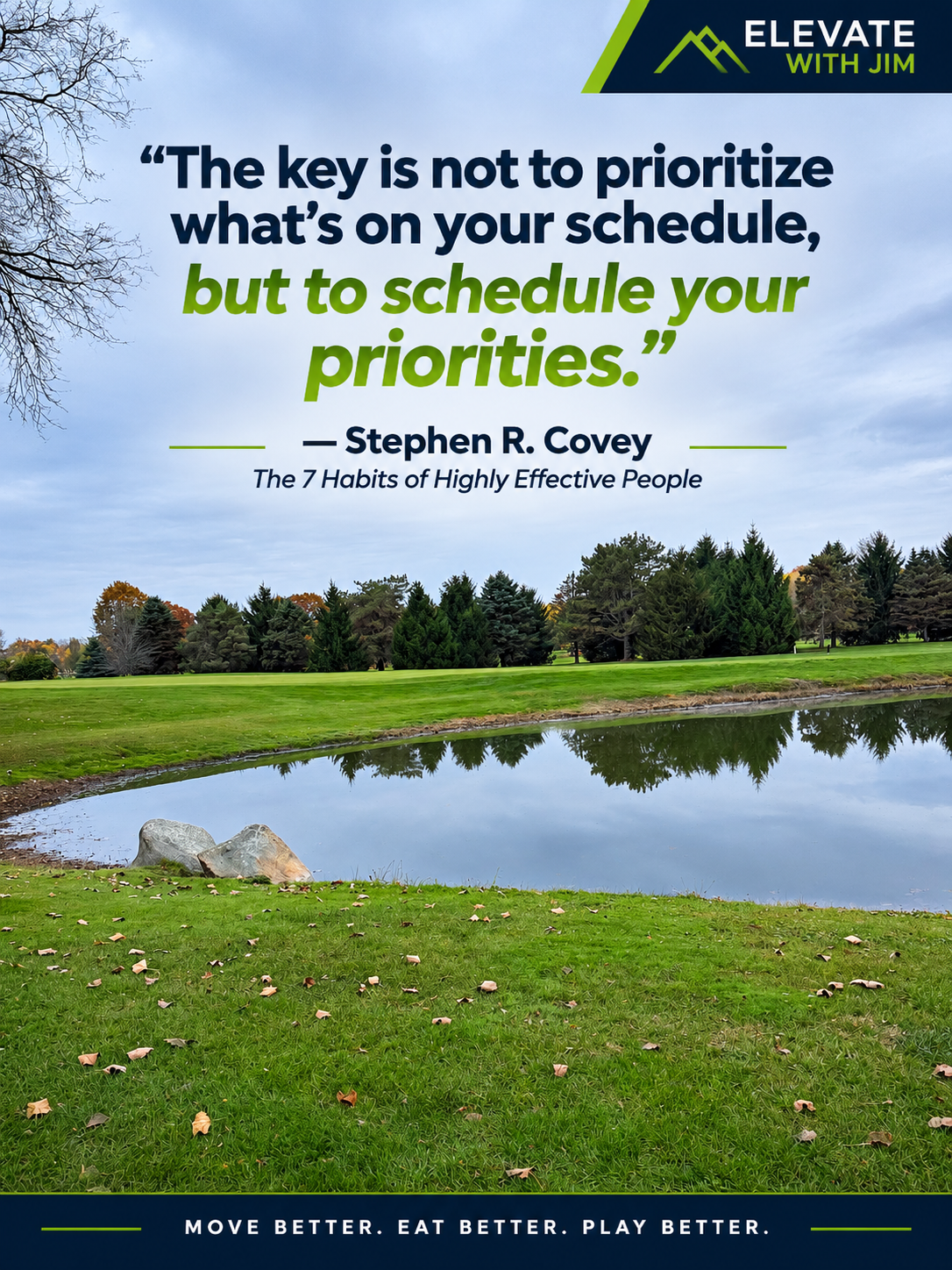
Take a look at your calendar.
Is there a place for your health and wellness on it?
If not, could you protect two workout appointments this week, even if they're shorter than you'd like?
And what will you do if one gets interrupted?
We can't control every demand on our time. But we can make thoughtful decisions about the time we do control.
You choose your busy. Make sure some of it is helping you become the person you want to be.
See you on the course!
— Jim