
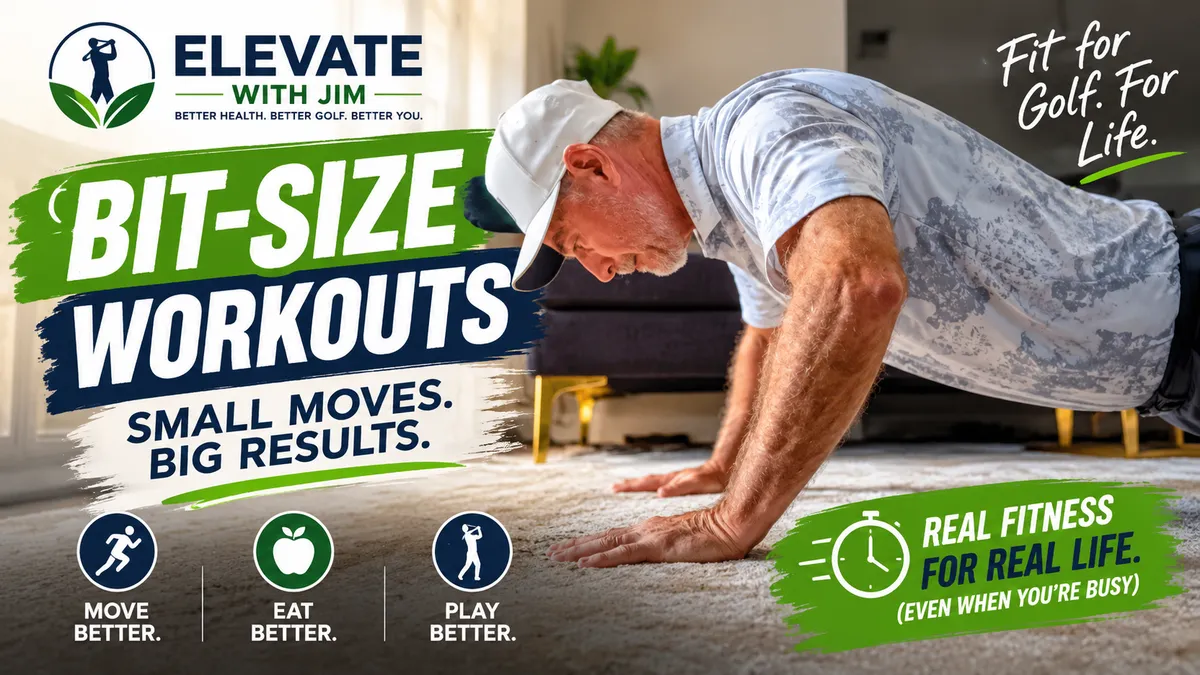
Bite-Size Workouts: How I'm Staying Active When I Can't Get to the Gym
Some days, finding an hour to go to the gym just isn't going to happen.
I spend a good part of my day sitting at a desk, working on my computer. And like most people, I can get wrapped up in what I'm doing.
Before I know it, a couple of hours have gone by, and I haven't moved much.
At 65, I've become increasingly aware of how important it is to keep moving, especially if I want to continue enjoying golf for years to come.
So lately, I've been trying something a little different.
I call them my bite-size workouts.
Instead of waiting until I have time for a full workout, I stop what I'm doing three or four times a day and spend about 10 minutes exercising.
Nothing fancy.
But by the end of the day, I've managed to get in 30 to 40 minutes of movement.
And I didn't have to leave the house.
What My Bite-Size Workouts Look Like
I don't follow an elaborate routine.
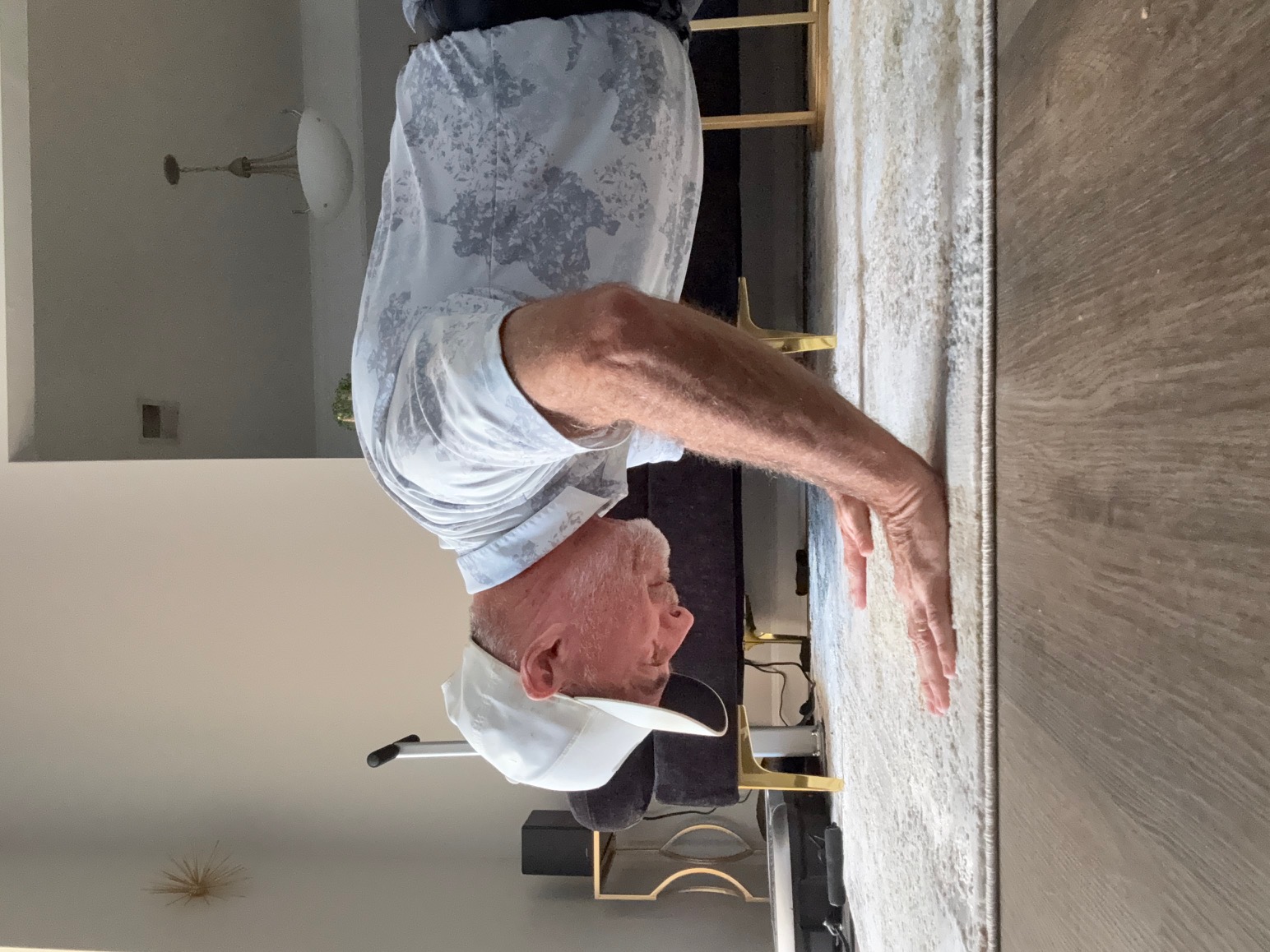
When it's time for a break, I get up from my desk and do a combination of stretching, foam rolling, and strength training.
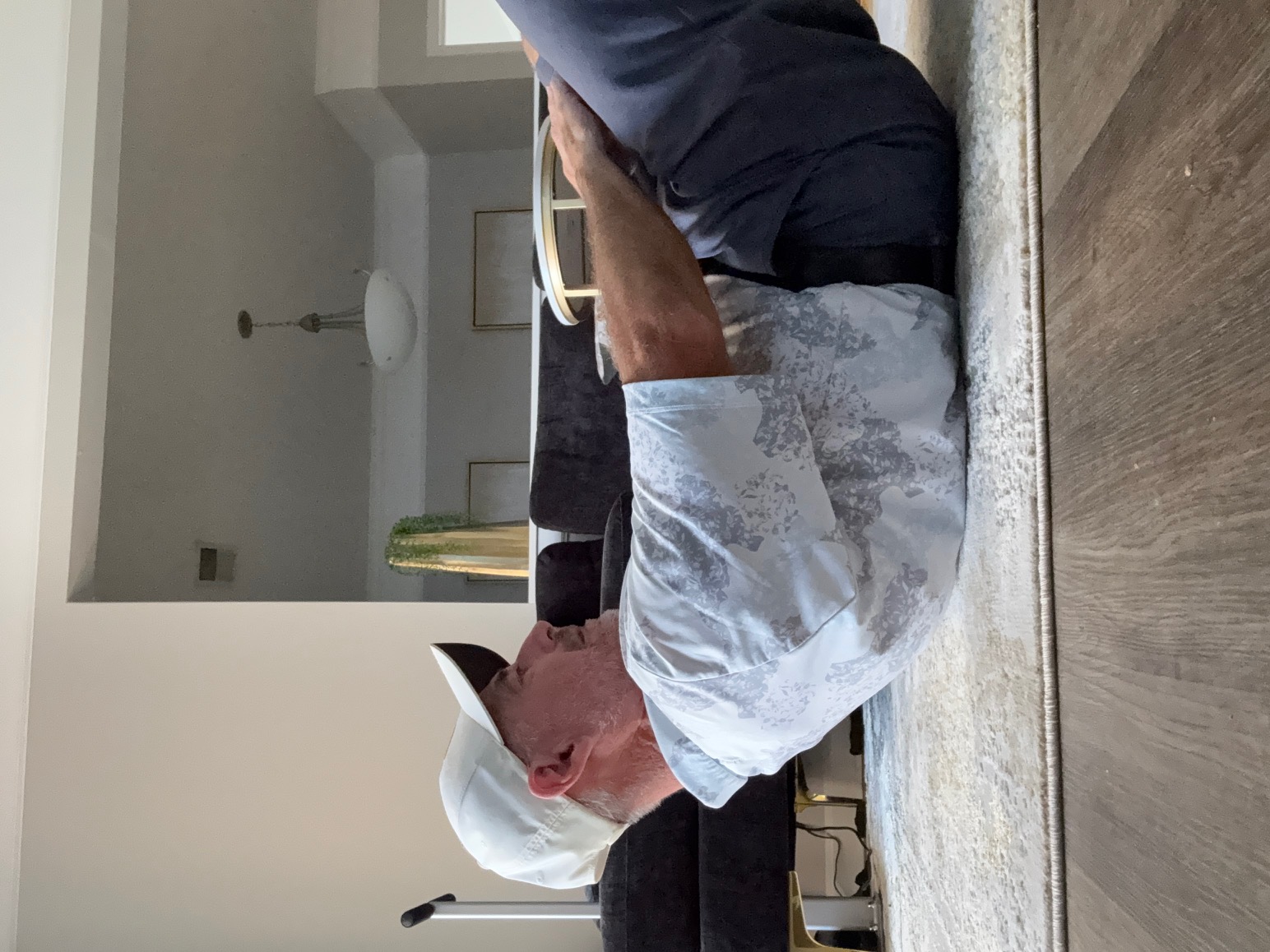
For strength training, I typically do one set of a few exercises:
Push-ups
Sit-ups
Bicep curls
Tricep extensions
I also spend some time stretching and using my foam roller.
As I shared in last week's blog, I've been rolling the outside of my upper legs, around the IT band, as well as my upper back.
I've noticed that foam rolling helps my hips feel less tight, so I've continued incorporating it into my routine.
I don't necessarily do every exercise during every break.
I mix things up depending on how I'm feeling and what I want to work on.
The important thing is that I'm getting out of my chair and moving.
And I've discovered something else.
Taking a few minutes away from the computer gives me a mental break, too.
When I sit back down, I often feel more refreshed and ready to get back to work.
Do Short Workouts Really Count?
That was one of the questions I had when I started doing this.
We've all heard the recommendations about getting 150 minutes of exercise each week.
But does it matter whether those minutes come from a traditional workout or several short sessions throughout the day?
I decided to see what the experts had to say.
Ask the Experts: The Science Behind Exercise Snacks
It turns out there's actually a name for this approach.
Researchers sometimes call short bursts of physical activity throughout the day “exercise snacks.”
And there's growing interest in how these short sessions can contribute to better health.
1. Every minute of movement counts
The World Health Organization recommends that adults get 150 to 300 minutes of moderate-intensity aerobic activity each week, along with muscle-strengthening activities at least twice weekly.
But here's something I found interesting.
The guidelines no longer require physical activity to last at least 10 minutes to count toward aerobic activity recommendations.
Research has shown that even shorter periods of activity can contribute to better health.
That's encouraging for those of us who don't always have time for a traditional workout.
Of course, stretching and foam rolling aren't the same as moderate-intensity aerobic exercise. And a few sets of push-ups don't necessarily replace a complete strength-training program.
But short sessions can be a useful part of an overall fitness routine.
Source: World Health Organization — Physical Activity Guidelines
2. Breaking up sitting time has benefits of its own
This one really caught my attention.
The American Diabetes Association recommends interrupting prolonged sitting with brief periods of physical activity, particularly for people with diabetes.
Research has found that even a few minutes of light movement every half hour can improve blood glucose responses in people with type 2 diabetes.
That's not the same as saying my particular routine produces those results.
But it reinforces something I've been thinking about.
Maybe we should pay as much attention to how long we're sitting as we do to how much time we spend exercising.
Source: American Diabetes Association — Breaking Sitting Streaks
3. Strength, balance, and mobility become increasingly important after 50
One thing I've learned is that maintaining strength and mobility doesn't suddenly become important when you turn 65.
It's something we should be paying attention to much earlier.
The World Health Organization recommends muscle-strengthening activities at least twice a week for all adults. For adults 65 and older, it also recommends regular activities that emphasize balance and functional strength to help maintain physical abilities and prevent falls.
But why wait until 65 to start working on these things?
That makes sense to me, especially when I think about golf.
Golf requires more than the ability to walk nine or eighteen holes.
We need strength to control the club, mobility to make a good turn, and balance to maintain a stable swing.
My current bite-size workouts emphasize upper-body strength and mobility.
But the research reminded me that I should also be including exercises for my legs and balance.
Some possibilities include chair squats, calf raises, standing on one leg near a sturdy support, or a few minutes of brisk walking.
Those are things I can easily incorporate into future breaks.
Source: WHO Guidelines on Physical Activity and Sedentary Behaviour
Jim's Take: Don't Let a Busy Day Become an Excuse
Here's what I like most about these bite-size workouts.
They eliminate one of the biggest obstacles to staying active.
Finding the time.
I don't have to change clothes, drive to the gym, or set aside an entire hour.
I just have to stop what I'm doing and move for 10 minutes.
Now, I still believe in regular strength training, stretching, and hot yoga.
And I certainly want to keep going to the gym.
But there are days when my schedule doesn't cooperate.
Rather than doing nothing, I can still do something.
And those small efforts add up.
I also like the idea of making movement part of my day instead of something I only do during a scheduled workout.
At 65, I'm trying to build habits that I can maintain for years, not just a few weeks.
Try This This Week
Here's my challenge.
The next time you find yourself sitting at your desk for an extended period, get up and take a movement break.
You don't even need 10 minutes.
Start with five.
Do a few stretches. Walk around the house. Try some chair squats or wall push-ups.
If you're doing strength exercises, choose a manageable effort, allow for recovery, and work toward including all the major muscle groups over the course of the week.
The idea isn't to exhaust yourself.
It's to find opportunities to move more throughout the day.
And remember, these longer exercise breaks don't mean we should sit uninterrupted for hours between them. Even standing up and walking briefly more often can be worthwhile.
For me, this all comes back to the reason I started Elevate with Jim.
I don't want to change my golf swing just because I'm getting older. I want to keep improving what my body is capable of doing.
And sometimes that progress doesn't come from an hour at the gym.
Sometimes it comes from 10 minutes between emails.
See you on the course!
— Jim
This article reflects my personal experience and general exercise research, not individualized medical advice. Exercise intensity and recovery needs vary, particularly when starting a new routine or managing an injury or health condition.



COMPANY
LEGAL
Copyright 2026. Elevate with Jim . All Rights Reserved.