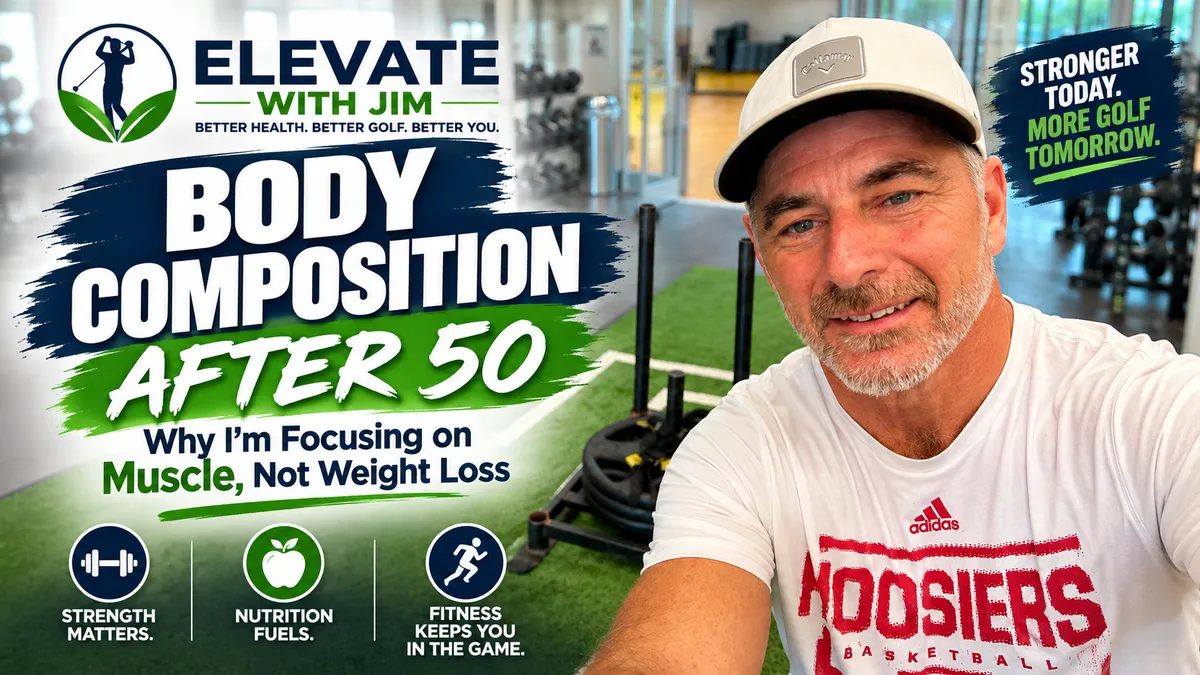
Body Composition After 50: Why I'm Focusing on Muscle, Not Weight Loss
Body Composition After 50: Why I'm Focusing on Muscle, Not Weight Loss
I was listening to a podcast recently that got me thinking about how I approach my health and fitness.
Jay Shetty was interviewing Dr. Vonda Wright, an orthopedic surgeon who specializes in healthy aging and physical performance.
They were discussing weight loss, exercise, and what happens to our bodies as we get older.
But one idea really caught my attention.
Maybe I shouldn't be thinking about losing weight. Maybe I should be thinking about changing my body composition.
And there was something else about the conversation that I found encouraging.
Dr. Wright's message was that getting older doesn't mean we have to accept losing muscle, strength, and physical capabilities.
We can still make meaningful improvements.
At 65, that's a message I like hearing.
It's Not Just About What the Scale Says
Like a lot of people, I've spent plenty of time thinking about what I weigh.
But two people can weigh exactly the same and have very different body compositions.
One might have more muscle and less body fat. The other might have less muscle and more fat.
The scale doesn't tell that story.
And here's what got me thinking.
What if I could add muscle, reduce body fat, and become stronger without losing much weight at all?
That's something I would consider progress.
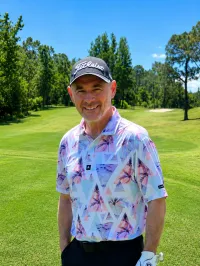
At this point in my life, I'm more interested in maintaining the strength and mobility I need to keep playing golf than reaching some arbitrary number on the scale.
I want to make a good turn.
Maintain my balance.
And I certainly wouldn't mind picking up a little more clubhead speed.
So how do we improve body composition?
Dr. Wright discussed three strategies that made a lot of sense to me.
Three Things That Caught My Attention
1. Challenge your muscles with strength training
I've been strength training regularly, but Dr. Wright reminded me that there's a difference between exercising and challenging your muscles enough to become stronger.
She emphasized lifting weights that challenge your muscles, using good technique and gradually increasing the demands.
The goal isn't to lift the heaviest weight possible.
It's to give your muscles a reason to adapt.
For me, that means continuing to work on strength while paying attention to how I'm progressing.
2. Feed your muscles with protein
This is something I've already been focusing on.
I typically start my morning with a protein shake, and I've been working on getting enough protein throughout the day.
Dr. Wright emphasized that building muscle requires more than exercise.
Our muscles also need the nutrients to support growth and recovery.
That makes sense to me.
If I'm asking my body to become stronger, I need to give it the nutrition to support that effort.
3. Train your cardiovascular system
This was probably the biggest new takeaway.
Dr. Wright talked about incorporating higher-intensity exercise to improve cardiovascular fitness.
She discussed short sprint intervals and longer intervals designed to challenge something called VO₂ max.
VO₂ max measures how much oxygen your body can use during intense exercise.
It's one indicator of cardiovascular fitness.
And improving it may help us maintain the endurance needed for golf and everyday life.
Ask the Experts: Can We Really Change Our Bodies After 50?
This is where I found the research particularly encouraging.
Building muscle is possible at almost any age
Research shows that older adults can increase strength and muscle mass through resistance training.
A systematic review of resistance training in adults over 60 found improvements in muscle strength and physical performance.
The amount of improvement varies, but the important point is that our muscles can still respond to training as we age.
Getting older doesn't mean our ability to improve disappears.
Research: Resistance Training in Older Adults
Protein helps support muscle growth
Research also shows that adequate protein, combined with resistance training, supports muscle maintenance and growth.
For physically active adults, recommendations often fall around 1.2–1.6 grams of protein per kilogram of body weight daily, although individual needs vary.
For someone weighing 170 pounds, that's approximately 93–123 grams of protein.
The takeaway isn't that everyone needs the same amount.
It's that protein deserves attention, particularly when we're working to build or preserve muscle.
Source: International Society of Sports Nutrition — Protein and Exercise
VO₂ max can improve with training
This was another encouraging finding.
Research shows that aerobic training, including appropriately structured interval workouts, can improve VO₂ max in middle-aged and older adults.
One commonly studied approach involves four minutes of challenging exercise followed by three minutes of easier recovery, repeated four times.
Dr. Wright discussed a variation involving four minutes of work and four minutes of recovery.
These workouts can be demanding, so they're something to build toward gradually.
A stationary bike or another low-impact activity may be a good option, depending on your fitness level.
Research: Aerobic Interval Training and VO₂ Max
Jim's Take: Don't Give In to Getting Older
Here's what stayed with me after listening to the podcast.
It wasn't just the advice about lifting weights, eating protein, or improving cardiovascular fitness.
It was the message of hope.
We don't have to accept that getting older automatically means becoming weaker, less mobile, and less capable.
Yes, our bodies change with age.
And no, we can't expect to do everything we did when we were 25.
But that doesn't mean we should stop trying to improve.
I've experienced some of this myself.
When I started playing golf regularly again in my 50s, my body wasn't capable of making the swing I wanted.
My hips were tight. My back would bother me.
I found myself making adjustments to my swing to accommodate those limitations.
Eventually, I decided to work on improving what my body could do instead.
Strength training, stretching, hot yoga, and paying more attention to nutrition and recovery have all become part of that effort.
And I've made progress.
Dr. Wright's interview reminded me that there's still room for improvement.
I want to continue building muscle and maintaining strength.
I'm going to pay more attention to body composition rather than just weight.
And I'm interested in adding some higher-intensity cardiovascular training.
But I'll introduce those changes gradually. My recent experience with lower-back tightness reminded me that pushing too hard, too quickly isn't necessarily the best approach.
What Do You Want Your Body to Be Capable of Doing?
If you're a golfer over 50, here's a question worth thinking about.
What would you like your body to be capable of doing five or ten years from now?
Maybe it's walking 18 holes without feeling exhausted.
Maybe it's maintaining your distance off the tee.
Or maybe it's having the strength, balance, and mobility to keep enjoying the game.
Whatever your goal, I hope you'll take some encouragement from this.
You may not be able to turn back the clock.
But you can still work on becoming stronger, healthier, and more capable than you are today.
That's the message I took away from Dr. Wright's interview.
And it's something I believe strongly.
It's never too late to transform your health and wellness.
See you on the course!
— Jim
This article shares my personal experience and general exercise research, not individualized medical advice. Strength training and high-intensity exercise should be adapted to your current fitness and health, with professional guidance when appropriate.

COMPANY
LEGAL
Copyright 2026. Elevate with Jim . All Rights Reserved.