Foam Rolling for Tight Hips: What I Learned from Tom Brady—and What’s Helping My Golf
A few years ago, I was listening to a podcast about Tom Brady and how he managed to keep playing professional football well into his 40s.
One thing caught my attention.
Muscle pliability.
Apparently, maintaining muscle pliability was a big part of Brady's training and recovery routine.
The idea was to keep his muscles flexible, responsive, and capable of handling the physical demands of football.
And one of the tools associated with that approach was a foam roller.
I'd heard of foam rolling before, but hadn't given it much thought.
But here was a guy playing one of the most physically demanding sports in the world at an age when most professional football players had long since retired.
That got my attention.
I'm certainly not trying to play professional football.
I'm just trying to keep playing golf.
So I decided there might be something worth learning.
What I'm Doing to Help My Tight Hips
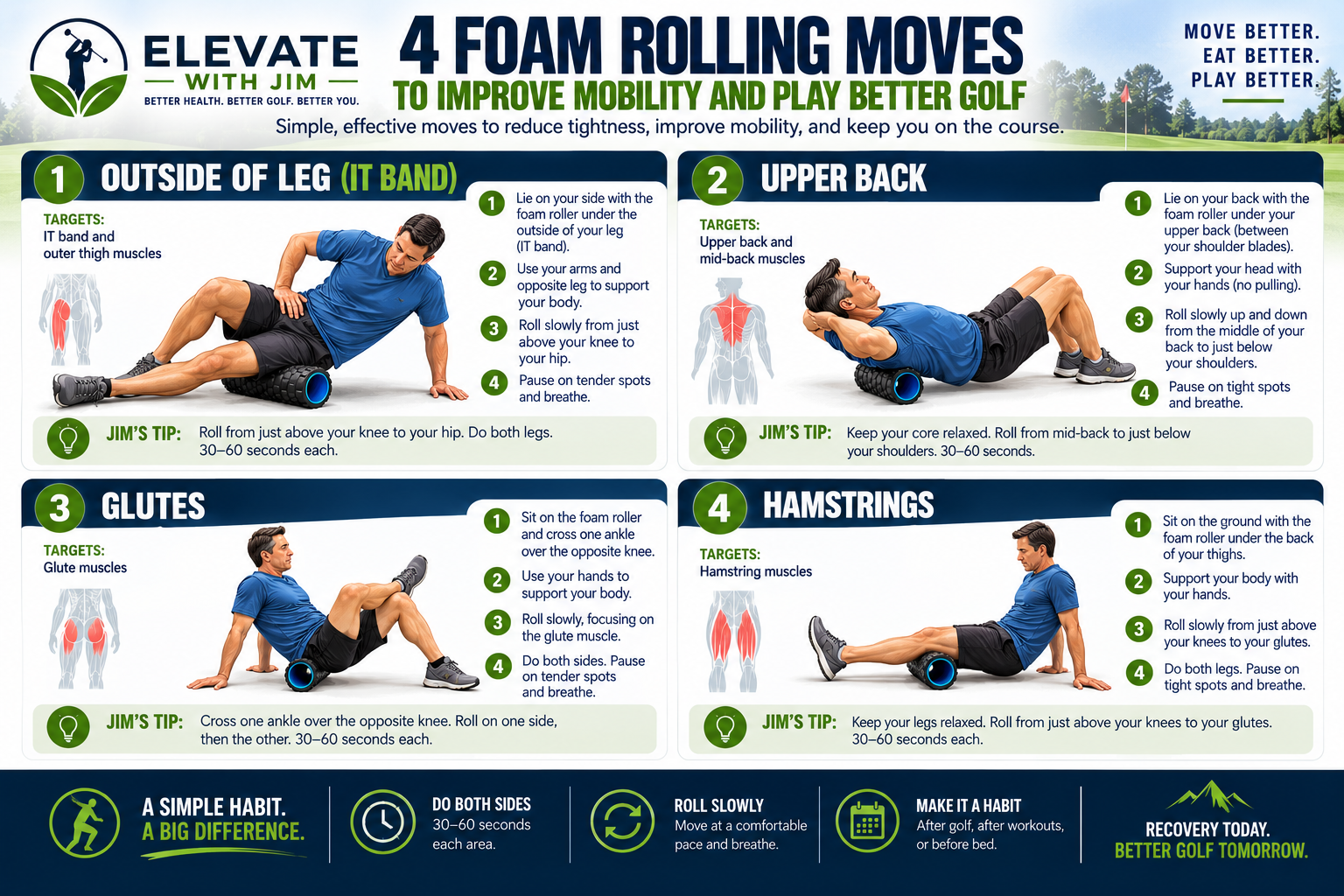
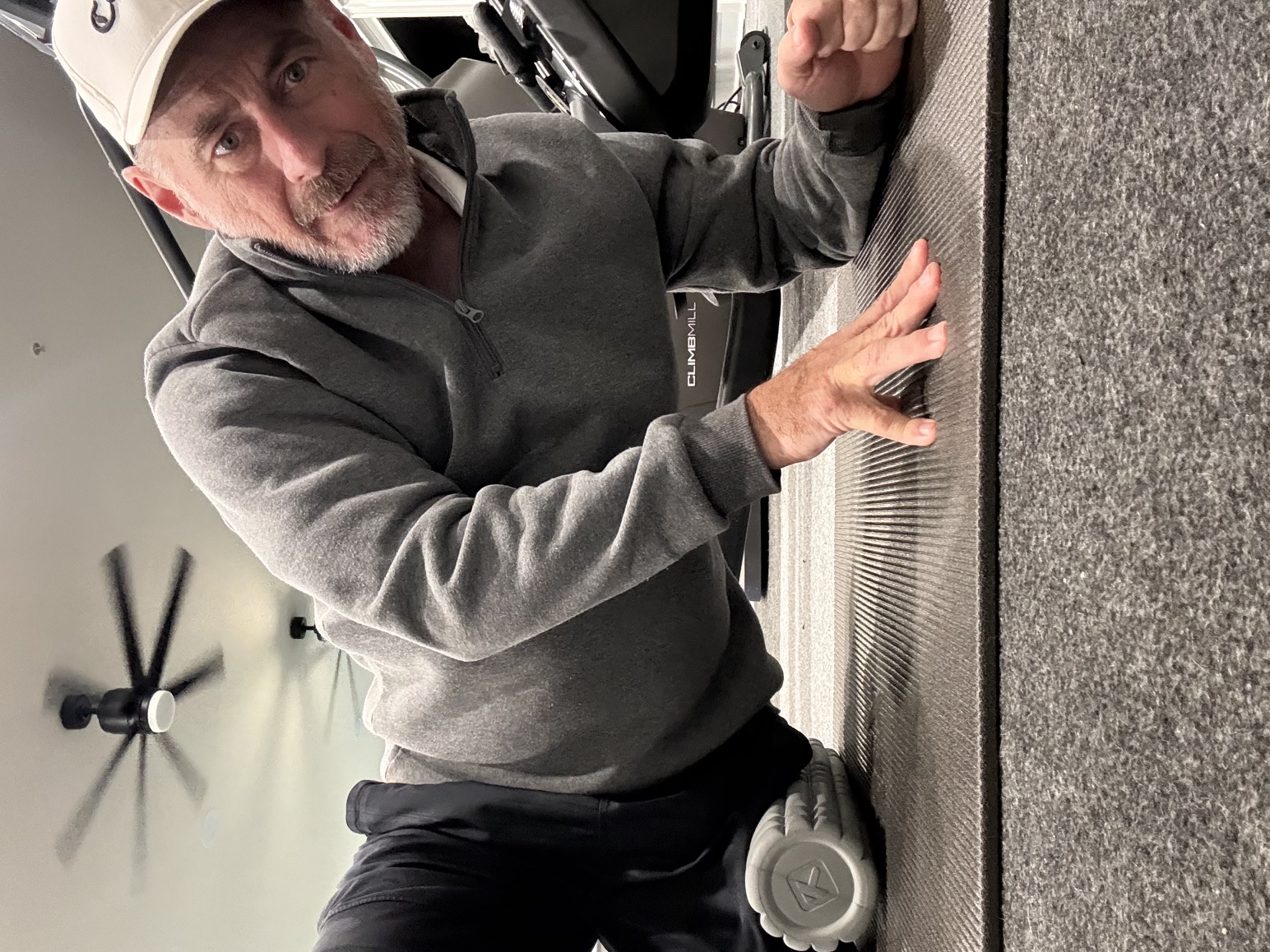
Lately, I've been using my foam roller more consistently.
The main area I've been working on is the outside of my upper legs, along what's called the iliotibial band, or IT band.
I've been rolling both legs two or three times a day.
Each session only takes a few minutes.
I also spend some time rolling my upper back.
Nothing particularly elaborate.
But I've noticed something.
My hips have been feeling looser.
And for me, that's a big deal.
When I started playing golf regularly again in my 50s, I discovered that my body didn't move the way it had when I was younger.
My hips were tighter. My back didn't always cooperate.
And I found myself making adjustments to my golf swing to accommodate those limitations.
My kids used to joke about whether I was going to use my young man swing or my old man swing.
The young man swing was the one I wanted to make.
The old man swing was full of compromises.
That's one reason I've become so interested in improving my strength and mobility.
And lately, foam rolling has become another part of that effort.
But I was curious.
Does foam rolling actually make your muscles more pliable?
Ask the Experts: What Does Research Say About Foam Rolling?
Tom Brady and his longtime trainer, Alex Guerrero, made muscle pliability a central part of their TB12 training philosophy.
Their approach emphasized keeping muscles soft, flexible, and responsive through hands-on soft-tissue work and other techniques, including foam rolling.
Brady played in the NFL until age 45.
That's impressive.
But his longevity doesn't prove that muscle pliability training was responsible.
So what does the research actually tell us?
Foam rolling may improve flexibility and range of motion
A 2022 systematic review and meta-analysis examined studies of foam-rolling programs and their effects on joint range of motion.
The researchers found evidence that regular foam rolling can improve range of motion.
That's encouraging for someone like me who's trying to maintain mobility as I get older.
But there's an interesting distinction.
Feeling looser doesn't necessarily mean the muscles or connective tissue have physically become softer.
Researchers believe changes in how the nervous system responds to pressure and stretching may help explain some of the improvements.
In other words, foam rolling may help you move more comfortably without permanently changing the structure of your muscles.
Research: Foam Rolling Training Effects on Range of Motion
What about rolling the IT band?
Here's something I didn't realize when I started.
The IT band isn't a muscle.
It's a thick band of connective tissue running along the outside of your thigh, from the hip toward the knee.
And research suggests that foam rolling doesn't significantly change the stiffness of the IT band itself.
One study examining foam rolling and stretching found no significant immediate reduction in IT band stiffness.
So when I roll the outside of my upper legs and feel less tightness afterward, I may not actually be loosening the band.
The benefit may involve how I perceive tightness or how comfortably I move.
That's an important distinction.
It also means there's no reason to aggressively grind away directly on the IT band. Gentle rolling of the surrounding hip and thigh muscles may be a more comfortable approach.
Research: Immediate Effects of Foam Rolling and Stretching on IT Band Stiffness
Jim's Take: I'm More Interested in How I Move
Here's what I find interesting about all of this.
I originally became interested in foam rolling because of something I heard about Tom Brady.
I liked the idea of maintaining muscle pliability as I got older.
And while the science may not support every claim made about pliability, there does appear to be evidence that foam rolling can help with range of motion.
More importantly, I've noticed a difference in how my hips feel.
I'm not suggesting that foam rolling is some kind of breakthrough.
And I'm certainly not suggesting it's going to solve every mobility problem.
For me, it's simply another tool.
I still do my strength training.
I still stretch.
I still practice hot yoga.
And now I'm paying more attention to foam rolling.
One thing I particularly like is that it doesn't take much time.
A few minutes during the day, and I'm done.
I don't know whether rolling two or three times a day provides any additional benefit over doing it once. That's simply the routine I've been trying.
And I'm paying attention to how my body responds.
At 65, I'm still learning what works best for me.
Try This Week
If you're dealing with tight hips or stiffness in your upper back, foam rolling might be worth exploring.
Start gently.
You don't need to put all your weight on the roller or push through significant pain.
For the outside of your upper leg, consider working the surrounding muscles rather than applying heavy pressure directly along the IT band.
And if you have persistent hip, knee, or back pain, talk with a physical therapist or healthcare professional before trying to treat it yourself.
For me, the bigger lesson goes back to something I've been thinking about for years.
When I started playing golf regularly again, I found myself changing my swing to accommodate what my body could no longer do.
Eventually, I decided to approach the problem differently.
Instead of continuing to change my swing, I wanted to improve what my body was capable of doing.
Foam rolling is one more small part of that effort.
And if spending a few minutes with a roller helps me move more comfortably and continue enjoying golf, I think it's time well spent.
Have you tried foam rolling, or found something else that's helped you stay loose and comfortable on the golf course? I'd love to hear what's working for you.
See you on the course!
— Jim
This article shares my personal experience and general research, not medical advice. Foam rolling isn't appropriate for every condition, and the research doesn't establish that frequent direct IT-band rolling provides additional benefits.