

My Lower Back Tightened Up During Golf. Here’s What I Learned About Training at 65.
Monday night was my nine-hole golf league.
I shot a 39.
Four greens in regulation. Fifteen putts.
Not a bad score.
But I wasn't happy on the drive home.
My lower back had tightened up during the round, and I was frustrated.
It hadn't happened to me on the golf course in months.
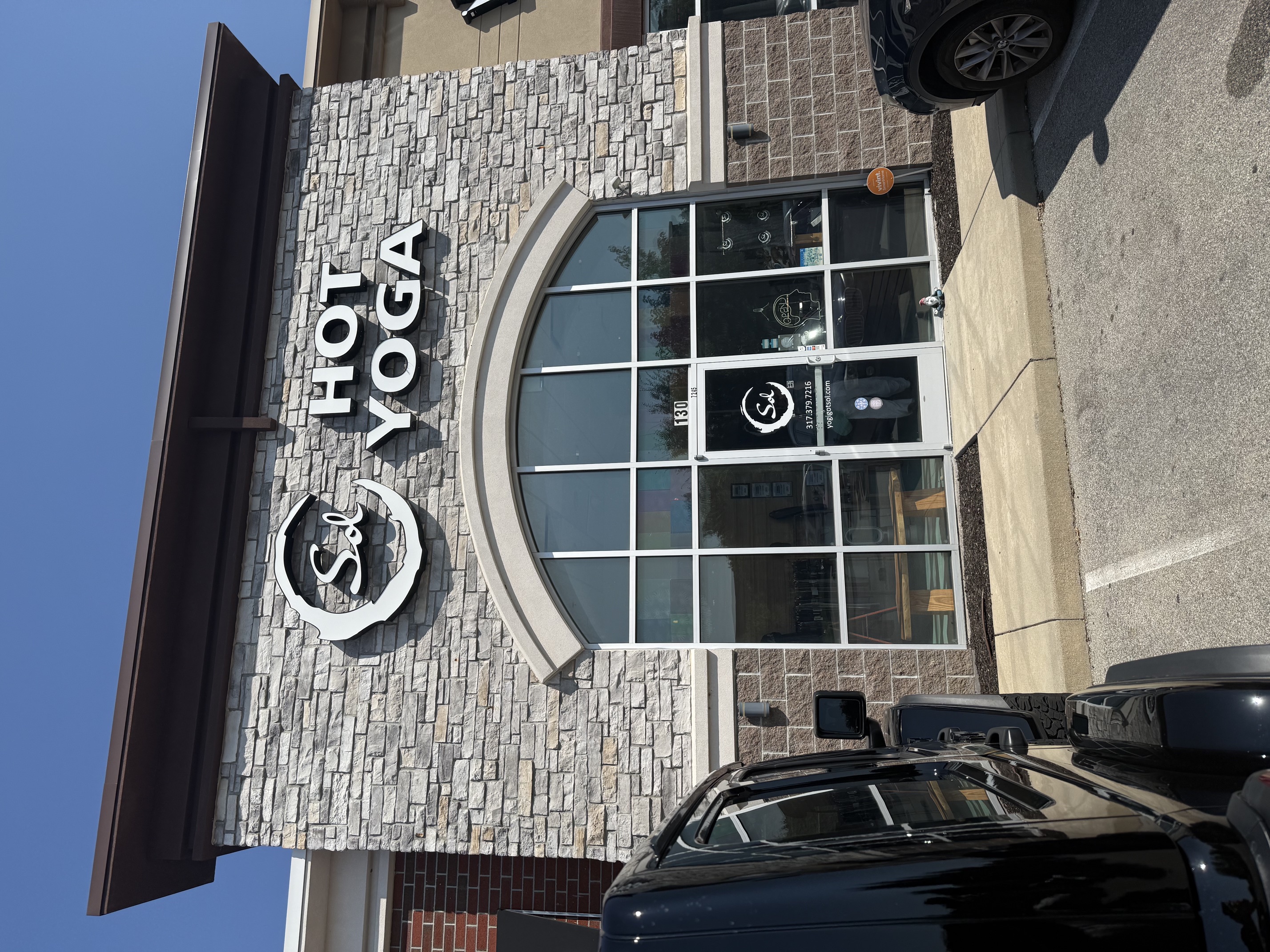
I've been putting a lot of work into keeping my body in condition to play golf. Strength training, stretching, hot yoga, and paying more attention to my nutrition and recovery.
And it had been paying off.
I was feeling better, moving better, and playing without the kind of back discomfort that used to be a regular part of my golf game.
Then Monday happened.
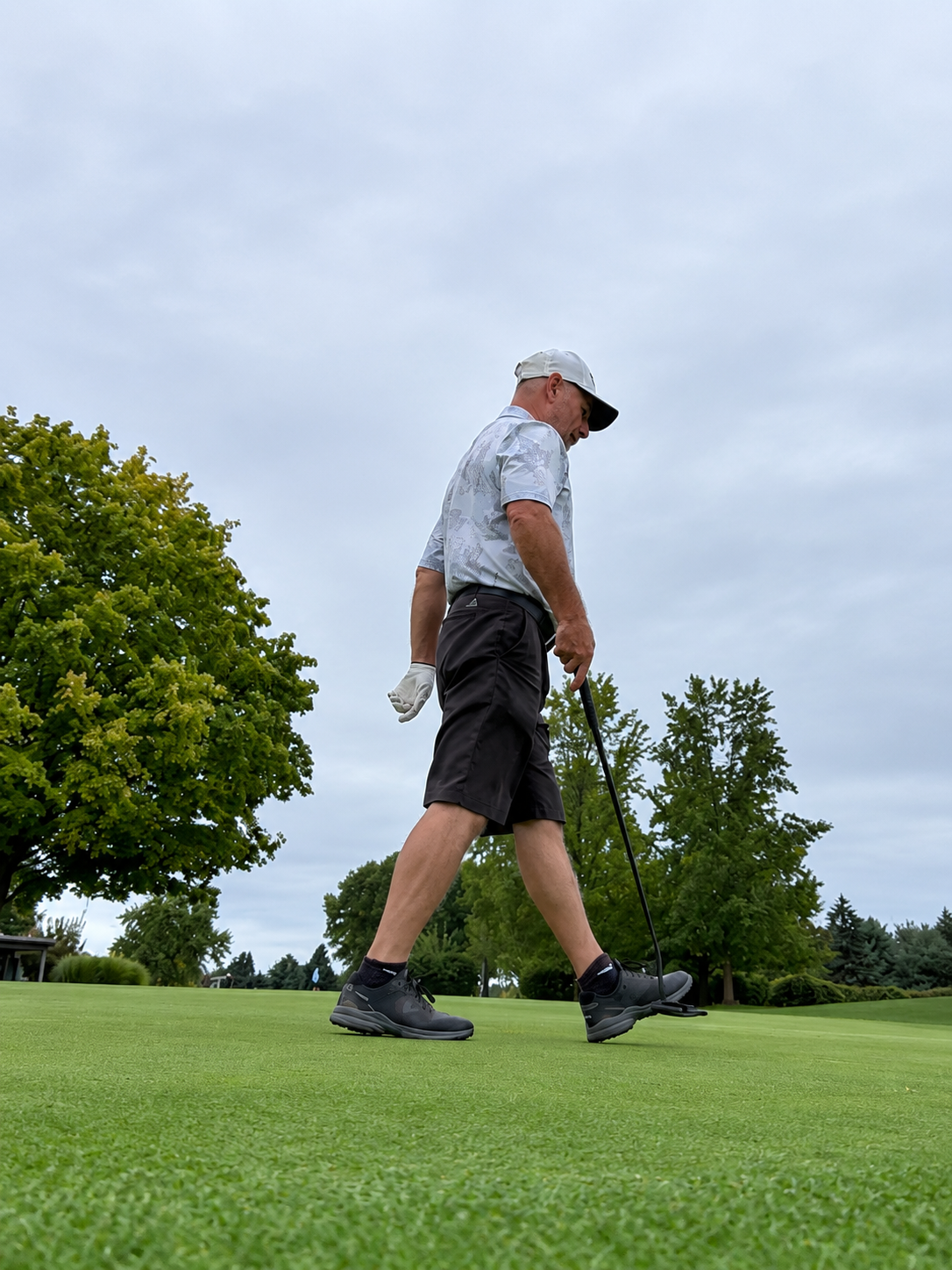
When My Back Tightened Up, My Golf Swing Changed
If you've dealt with lower-back tightness while playing golf, you probably know what I'm talking about.
When your back starts bothering you, it becomes difficult to make the swing you want to make.
You shorten your turn. You become more cautious. You start making adjustments to work around what your body won't let you do.
At least, that's what happens to me.
And my driving showed it.
I hit one fairway all night.
And that one was what I would call a good miss.
Fortunately, my putter was working. Fifteen putts helped me salvage a 39.
But the score wasn't what I was thinking about on the drive home.
I was thinking about my back.
To be honest, I was mad.
I'd been doing all this work to avoid exactly this kind of problem. For months, I'd been feeling like I was making real progress.
Now I was wondering what had gone wrong.
Looking Back, I May Have Pushed Too Hard
My back was still stiff over the next couple of days.
I continued with my strength training, stretching, hot yoga, and supplements, adjusting my activity around how I felt.
By the third day, I was feeling back to normal.
That was encouraging.
But I was still thinking about what might have caused the problem.
Then I remembered something.
In the days leading up to Monday's round, I'd incorporated a few new exercises into my strength-training routine.
I'd also been experimenting with golf swing-speed training drills.
Both were things I wanted to do to improve my physical capabilities and, ultimately, my golf game.
But maybe I'd introduced too much too quickly.
I can't say for certain that either one caused my back to tighten up. I don't know that.
What I do know is that I'd changed my training routine shortly before the problem appeared.
And that led me to two lessons.
Lesson One: At 65, I Need to Be More Patient With My Training
I want to get stronger.
I want to improve my flexibility and mobility.
And I'd certainly like to pick up a little more clubhead speed.
But I have to remember that my body needs time to adapt when I ask it to do something new.
Adding an exercise, increasing the weight I'm lifting, doing more repetitions, or introducing speed-training drills all place additional demands on my body.
I don't think the answer is to stop challenging myself.
Quite the opposite.
I believe continuing to challenge my body is an important part of staying healthy and playing golf as I get older.
But I need to be more intentional about how I do it.
Introduce a new exercise.
Give my body time to adjust.
Then gradually increase the challenge.
Looking back, I may have been a little too enthusiastic about making progress.
Sound familiar?
Ask the Experts: How Should Golfers Over 50 Build Strength and Mobility?
The research offers some useful guidance.
Increase the challenge gradually
The National Institute on Aging recommends building physical activity gradually, starting at a level appropriate for your current fitness and increasing the challenge over time.
That applies to strength training, too.
Adding weight, repetitions, or new exercises can help build strength, but increasing the demands too quickly can contribute to soreness or injury.
For golfers over 50, the practical takeaway is to give your body time to adapt when you introduce something new.
Strength and mobility both matter. The National Institute on Aging recommends including strength, flexibility, balance, and endurance activities as part of a well-rounded routine.
Source: National Institute on Aging — Tips for Getting and Staying Active as You Age
Consistent training can improve physical capacity
A systematic review of resistance-exercise recovery in adults age 65 and older found that recovery varies between individuals and exercises. It also identified evidence that repeated exposure to an exercise may reduce soreness from later sessions, although the findings were not consistent enough to establish a universal recovery timetable.
That reinforces an important point: your body can adapt to training, but it still needs time to recover.
Regular resistance training can improve strength and physical function in older adults. It doesn't guarantee that you'll avoid every ache or setback, but it gives us good reason to keep working on our physical capabilities.
Source: Recovery from Resistance Exercise in Older Adults — Systematic Scoping Review
Lesson Two: Maybe the Work I've Been Doing Helped Me Recover
This is the part of the experience that left me feeling encouraged.
Yes, my back tightened up.
Yes, I was frustrated.
But three days later, I was feeling normal again.
And I couldn't help thinking about how different that might have been a few years ago.
I've been consistently working on my strength, mobility, and overall health.
I believe that work has made my body more capable of handling the physical demands of golf.
And I suspect it may have helped me recover from this setback.
Can I prove that?
No.
I can't tell you whether my strength training, hot yoga, stretching, supplements, or simply the passage of time made the biggest difference.
But I do know that I've made progress.
A few years ago, lower-back discomfort was a regular part of my golf experience.
Now I can go months without experiencing it during a round.
That's progress, even if Monday night didn't feel like it.
Jim's Take: Patience and Consistency Go Together
Here's what I've been thinking about since Monday.
At 65, I still want to push myself.
I want to get stronger, move better, and continue improving my golf game.
But I need to remember that patience is part of the process.
I don't have to add more weight, more repetitions, and a new exercise all at once.
And when I try something new, I need to pay attention to how my body responds.
If you're working on improving your strength or mobility for golf, maybe it's worth asking yourself the same question.
Am I giving my body enough time to adapt to the work I'm asking it to do?
You don't have to stop challenging yourself. Just be thoughtful about how quickly you increase the demands.
And if you experience a setback, pay attention to what your body is telling you rather than trying to push through pain.
For me, Monday night was a reminder that consistency and patience belong together.
The goal isn't to see how much I can do in one workout.
The goal is to build a body that allows me to keep playing golf for years to come.
Keep doing the work. Give your body time to adapt. And don't let one difficult round erase the progress you've already made.
See you on the course!
— Jim
This article shares my personal experience, not a diagnosis or treatment recommendation. New or recurring back pain can have many causes. If pain persists, worsens, or is accompanied by weakness, numbness, or changes in bowel or bladder function, seek medical care. Exercise and recovery plans should be adapted to your individual health and circumstances.