
Take a Mulligan: A Golf Lesson for Your Health and Wellness Journey
One of the things I love about golf is how many lessons from the game apply to everyday life.
I have a book called Birdies, Bogeys, and Life Lessons from the Game of Golf. It's a collection of 52 devotions connecting scripture with lessons from golf.
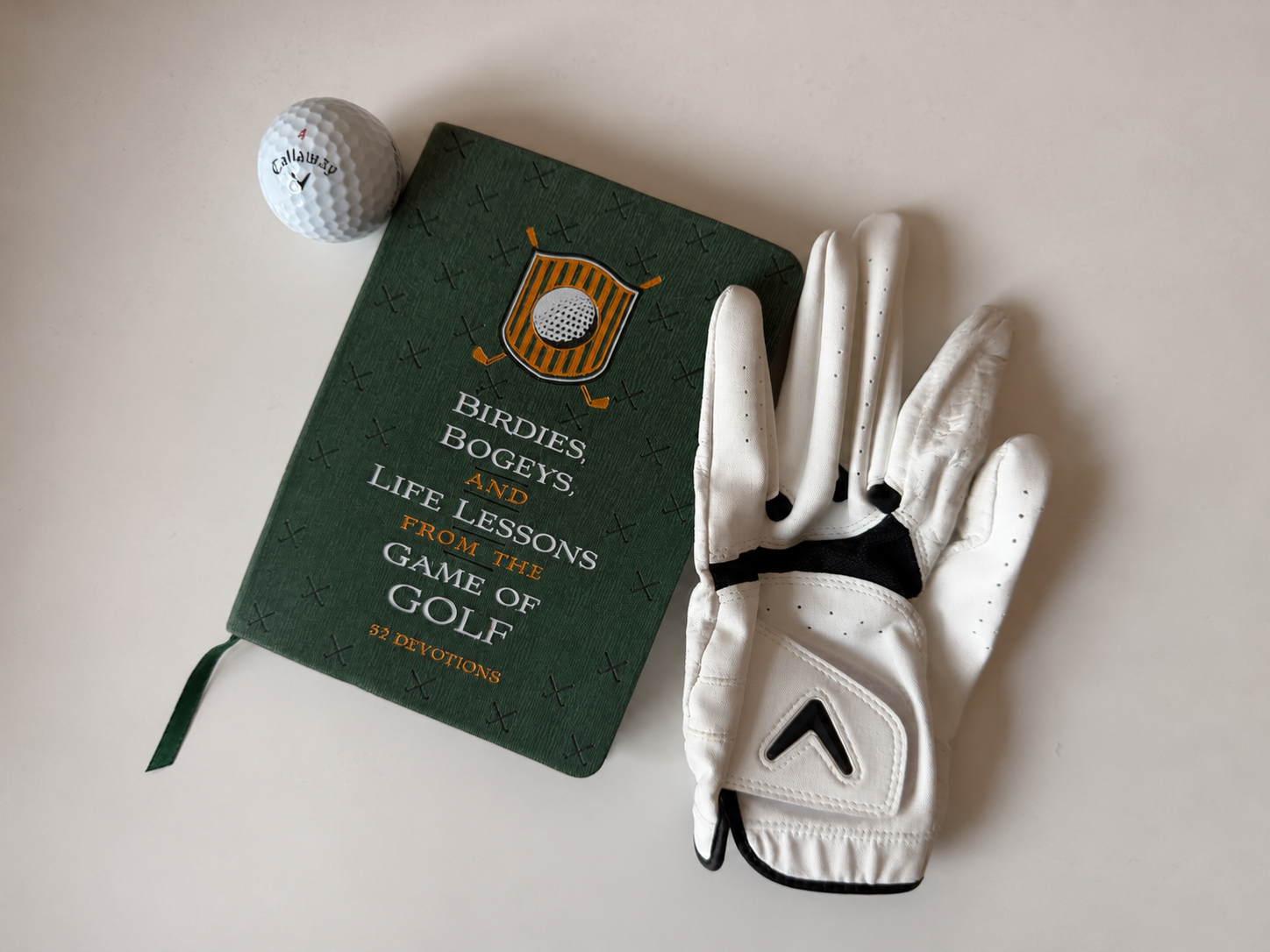
Recently, I came across one titled “Take a Mulligan.”
It got me thinking.
Especially with Thanksgiving and the holiday season just around the corner.
Because I think all of us could use a mulligan every once in a while.
Not necessarily on the golf course.
Sometimes we need one on our health and wellness journey.
Where Did the Mulligan Come From?
If you've played golf for any length of time, you know what a mulligan is.
You step up to the first tee, take a big swing, and watch your ball disappear into the woods.
Your playing partner looks over and says, “Go ahead, take a mulligan.”
A do-over.
Another chance to hit the shot.
Now, mulligans aren't allowed under the official Rules of Golf. But they're certainly part of the tradition of friendly rounds.
And the history behind the term is interesting.
According to the United States Golf Association, the most widely accepted origin involves a Canadian golfer named David Mulligan, who played at St. Lambert Country Club near Montreal during the 1920s.
As the story goes, Mulligan hit a poor drive off the first tee and decided to hit another ball.
He reportedly called it a correction shot.
His playing partners eventually began referring to the extra shot as a “mulligan.”
There are other versions of the story, including one involving John “Buddy” Mulligan at a New Jersey golf club during the 1930s.
Nobody knows for certain which account is correct.
But somewhere along the way, golfers adopted the idea that occasionally, you deserve another chance.
Source: USGA — Golf History Questions
And I think there's a pretty good lesson in that.
We All Need a Mulligan Sometimes
Think about your health and wellness goals.
Maybe you've committed to strength training three times a week.
But work gets busy, and you miss a workout.
Or you've been making an effort to eat healthier, watching your portions and getting enough protein.
Then you attend a party and eat more than you intended.
Or maybe you've been working on getting enough sleep, but a late evening throws off your schedule.
Sound familiar?
It certainly does to me.
The question isn't whether we're occasionally going to get off track. It's what we do afterward.
And that brings me to Thanksgiving.
My Thanksgiving Mulligan
Last Thanksgiving, I went into the day with a plan.
I was going to enjoy the meal without going overboard.
Small portions.
Focus on the turkey for protein.
And most importantly, no second plate of food.
A pretty reasonable plan, I thought.
And things were going well.
Until I discovered the buffalo mac and cheese.

Now, I've eaten plenty of mac and cheese over the years.
But this stuff was amazing.
And somewhere between that first helping and the thought of having just a little more, my carefully developed Thanksgiving strategy went right out the window.
Let's just say I didn't stick to the one-plate rule.
By the time I finished my second plate, I was feeling pretty lethargic.
Tired.
And wondering why I'd eaten so much.
I had gone into the day with good intentions.
But I didn't follow through.
Does that mean all the work I'd been doing to improve my health was wasted?
Of course not.
It means I enjoyed Thanksgiving, ate more than I intended, and learned something about myself.
And this year?
I'm taking a mulligan.
I'll make another plan, enjoy the holiday, and try to make better choices.
But if things don't go exactly as planned, I'm not going to carry that disappointment into the next day.
Ask the Experts: Why Getting Back on Track Matters
There's research supporting the idea that setbacks are a normal part of developing healthier habits.
The National Institute of Diabetes and Digestive and Kidney Diseases recommends recognizing setbacks, learning from them, and returning to your healthy routine rather than giving up.
Research on self-compassion also suggests that responding to dietary setbacks without excessive self-criticism may help people maintain confidence in their ability to make healthier choices.
The important thing isn't being perfect. It's returning to the habits that support your goals.
Source: NIDDK — Changing Your Habits for Better Health
Jim's Take: Focus on Your Next Shot
Here's what I've learned.
When we're working on improving our health, it's easy to think we need to be perfect.
Never miss a workout.
Always eat the right foods.
Get enough sleep every night.
But that's not how life works.
There will be busy weeks.
There will be holidays, celebrations, and unexpected interruptions.
And occasionally, there's going to be some really good buffalo mac and cheese.
The goal isn't perfection.
The goal is to develop habits that are strong enough to bring us back when we get off track.
And here's what I like about the mulligan analogy.
In golf, when you take a mulligan, you don't stand there feeling guilty about your first shot.
You put another ball on the tee.
You take a breath.
And you focus on making the next swing.
That's how I want to approach my wellness journey.
If I miss a workout, I'll get back to my routine.
If I overindulge at a holiday dinner, I'll return to my normal eating habits at the next meal.
If I don't sleep well, I'll work on getting back to my regular schedule.
No guilt.
No disappointment carried forward.
Just a renewed commitment to taking care of myself.
So as we head into the holiday season, here's my encouragement.
Enjoy your family.
Enjoy the celebrations.
And remember that one imperfect day doesn't define your wellness journey.
Every day is another opportunity to recommit to your health and what you want your body to be capable of doing.
For me, that includes playing better golf for years to come.
Keep moving. Keep playing.
See you on the course!
— Jim
P.S. There's nothing wrong with enjoying a cheat day or a special holiday meal.
But here's something I've noticed about myself.
As I've developed healthier eating habits, my body doesn't seem to respond as well to those big indulgences.
Not because the food doesn't taste good. It certainly does!
But I often don't feel very good afterward.
Last Thanksgiving was a perfect example. By the end of that second plate, I was tired and lethargic.
I'm learning that enjoying my favorite foods and eating until I'm uncomfortable don't have to be the same thing.
This year, I'll still enjoy Thanksgiving dinner.
I'll just try to remember how I want to feel when it's over!


COMPANY
LEGAL
Copyright 2026. Elevate with Jim . All Rights Reserved.