

Sugar Expert Life Hack: Eat Vegetables First for Stable Energy
Every once in a while, something pops up in my YouTube feed that catches my attention.
This week it was a podcast titled:
“The SUGAR Expert: Everything You Need To Know About Glucose Spikes (& 5 HACKS TO PREVENT THEM)”

Okay.
If you haven't noticed yet, I'm kinda into health and wellness.
So yes, they got me.
I clicked.
The guest was Jessie Inchauspé, better known as the Glucose Goddess. She's a French biochemist and bestselling author who talks a lot about glucose and how the food we eat affects it.
There was a lot of interesting information in the conversation.
But one thing Jessie talked about changed the way I think about something I eat every day:
Carbohydrates.
I don't think I've ever really thought about what happens to them after I eat them.
I Hadn't Really Thought About Carbohydrates This Way
When most of us hear “sugar,” I think we picture the obvious stuff.
Candy. Cookies. Cake. A Coke.
But carbohydrates don't have to taste sweet to affect our blood glucose. Our bodies break digestible carbohydrates—including starches—down into simple sugars such as glucose.
Think about a bagel.
It might have little or no added sugar, but much of the starch will still be broken down into glucose during digestion.
Fiber is different, so it isn't accurate to simply say that all carbohydrates are sugar.
That was the first thing that got my attention.
Then Jessie explained something surprisingly simple we can do with an ordinary meal that may change how quickly that glucose hits our bloodstream.
And that's where the vegetables come in.
What If You Simply Ate Your Vegetables First?
Jessie's suggestion was incredibly simple:
When you sit down for a meal, eat your vegetables first. Then eat the rest of your meal.
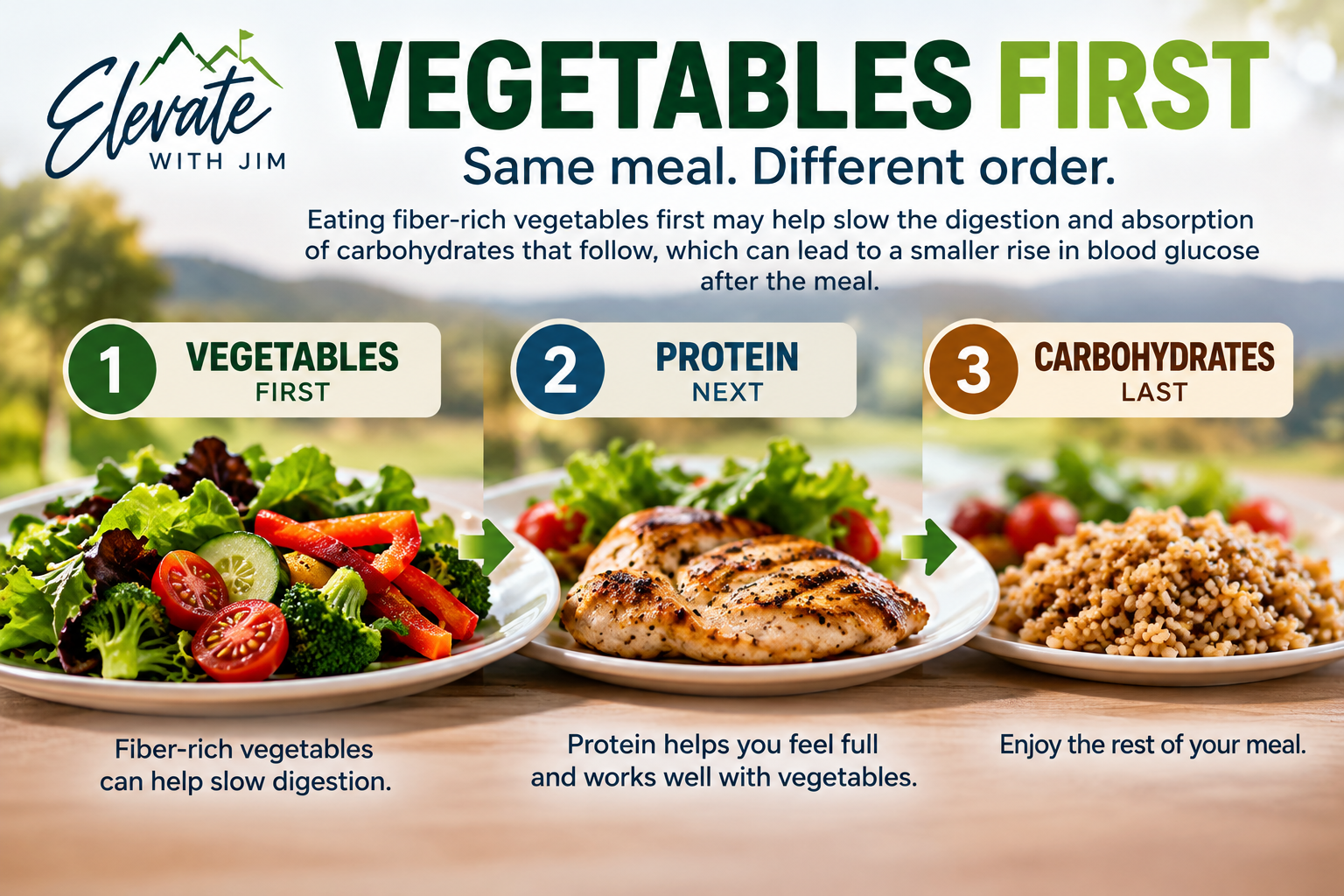
The idea is that the fiber-rich vegetables can slow the digestion and absorption of the carbohydrates that follow, helping reduce the rise in glucose after the meal.
My first reaction was:
That's it?
No complicated diet.
No counting everything I eat.
No new supplement.
Just change the order in which I eat food that's already sitting on my plate.
That sounded almost too easy.
So I wanted to know if there was actually research behind it.
Ask the Experts: Does Eating Vegetables First Really Work?
There is research supporting the idea.
A recent review of studies on meal sequence found that eating vegetables, fruits or protein-rich foods before carbohydrate-rich foods generally resulted in a lower post-meal glucose response. The researchers also noted that many of the studies have been small and more long-term research is needed.
Another study gave people with prediabetes the same meal on different occasions but changed the order in which they ate it.
When vegetables and protein came before the carbohydrates, the post-meal glucose response was substantially lower than when the carbohydrates came first.
The food didn't change.
The order did.
That's what caught my attention.
Why Might a Golfer Care About This?
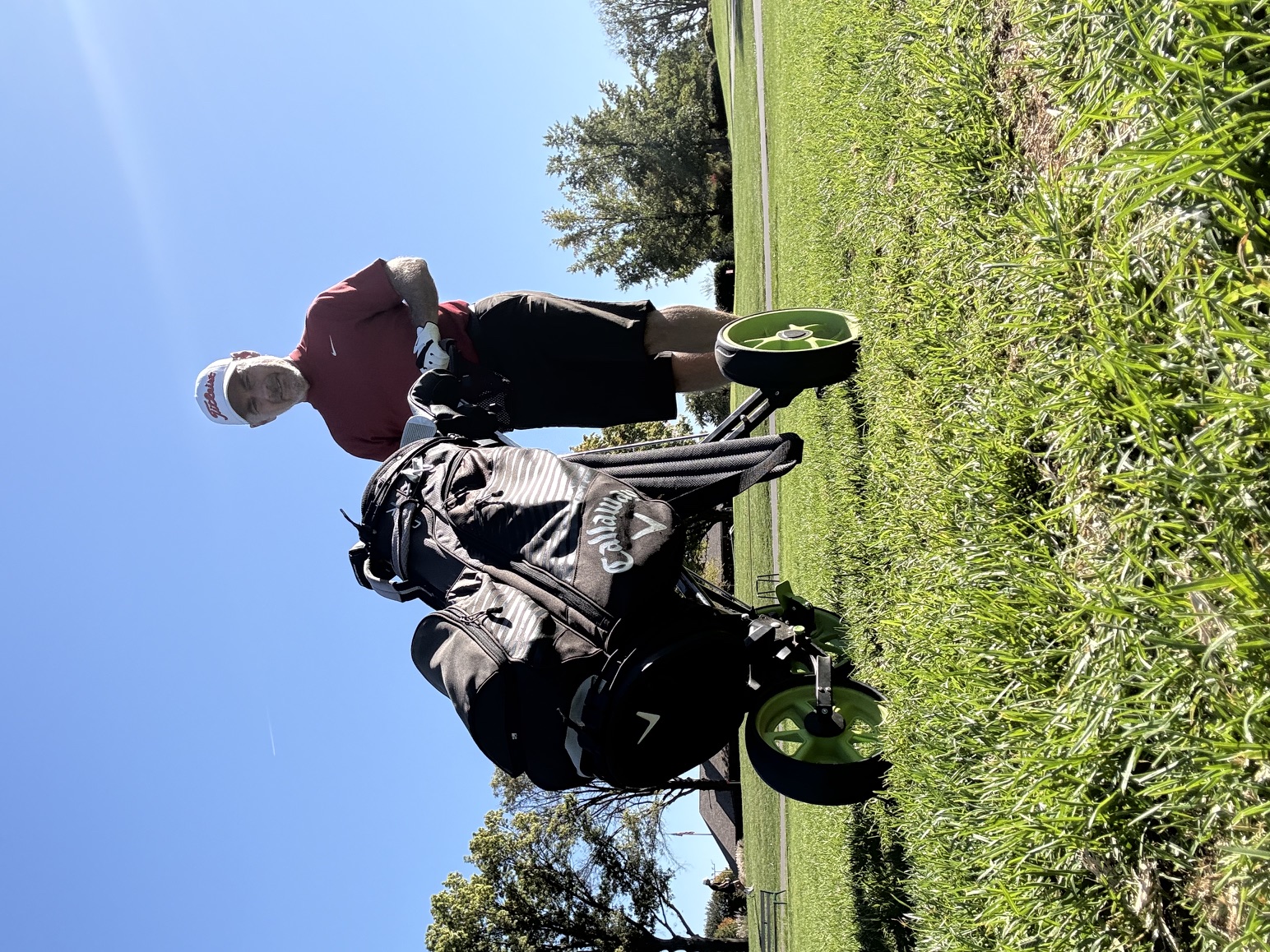
This is where it became more than just an interesting nutrition fact for me.
Think about a typical golf day.
Maybe you grab a bagel, muffin or bowl of cereal before you play. You make the turn and grab something quick.
Then somewhere around holes 13, 14 or 15, your energy isn't quite there.
You're hungry. Maybe a little irritable. Your concentration isn't as sharp as it was on the front nine.
Now, I'm not saying a glucose crash is the reason you just snap-hooked your drive into somebody's backyard.
I've managed to do that with perfectly adequate energy.
But golf requires energy and concentration for four hours or more. That got me thinking about whether what—and how—I eat could help me maintain both.
What Could a Blood-Sugar “Crash” Feel Like on the Course?
Low energy or weakness. Hunger. Trouble concentrating. Irritability. Headache, dizziness or shakiness.
None of those sound particularly helpful when you're walking a golf course, making decisions and trying to execute a golf swing.
That doesn't mean feeling tired on the back nine automatically means your blood sugar has “crashed.”
But it's another reason I'm interested in learning more about this.
A Few Other Ideas That Caught My Attention
Jessie discussed several other simple ideas.
One was moving after a meal. Research suggests activity after eating can help reduce the post-meal glucose response.
Another was what she calls putting “clothing” on your carbs—combining carbohydrates with things like protein and fiber rather than eating them by themselves.
She also talked about vinegar before meals, which has some research behind it as well.
Interesting stuff.
But I'm not going to suddenly adopt five new rules because I listened to one podcast.
That's usually not how I approach things.
Jim's Take: I'm Starting With One Thing
Vegetables first.
If I'm sitting down for lunch or dinner and there are vegetables on my plate, I'm going to eat those first.
That's it.
I'm not expecting some miraculous transformation. I'm not going to obsess over it. And I'm certainly not going to pretend I'll do it perfectly.
I'm just going to keep it in mind.
Because I've learned that I'm much more likely to stick with something when it's simple enough to become part of my normal life.
And this seems pretty simple.
Maybe That's the Bigger Lesson
I'm fascinated by this stuff.
Not because I'm trying to become a nutrition expert.
I'm not.
I'm a 65-year-old guy trying to figure out what I can do to stay healthy and capable for as long as possible.
I want to remain physically capable of doing the things I love for as long as possible.
Golf just makes that goal very tangible for me.
So I keep learning.
I listen. I read. I investigate. Sometimes I try things.
Some things I investigate and decide aren't for me.
Some I try and eventually stop doing.
And every once in a while, I find something incredibly simple that makes me think:
Why wouldn't I try that?
Eating my vegetables first falls into that category.
I'll let you know how it goes.
And if this subject interests you, I'd recommend listening to the entire conversation with Jessie. I found it fascinating. Here is the link.
See you on the course,
Jim
This article shares what I'm learning and experimenting with personally. It isn't medical or nutrition advice. If you have diabetes, take glucose-lowering medication, or have other health concerns, talk with your healthcare professional before making significant dietary changes.


COMPANY
LEGAL
Copyright 2026. Elevate with Jim . All Rights Reserved.